Autism: A Labyrinth of Extraordinary Perception
At its core, autism is a condition that influences how a person absorbs the world around them, how they process sensory input, communicate thoughts, and engage in social exchanges. Yet it is no less human, no less worthy of embrace. In fact, it is often laced with rare brilliance.
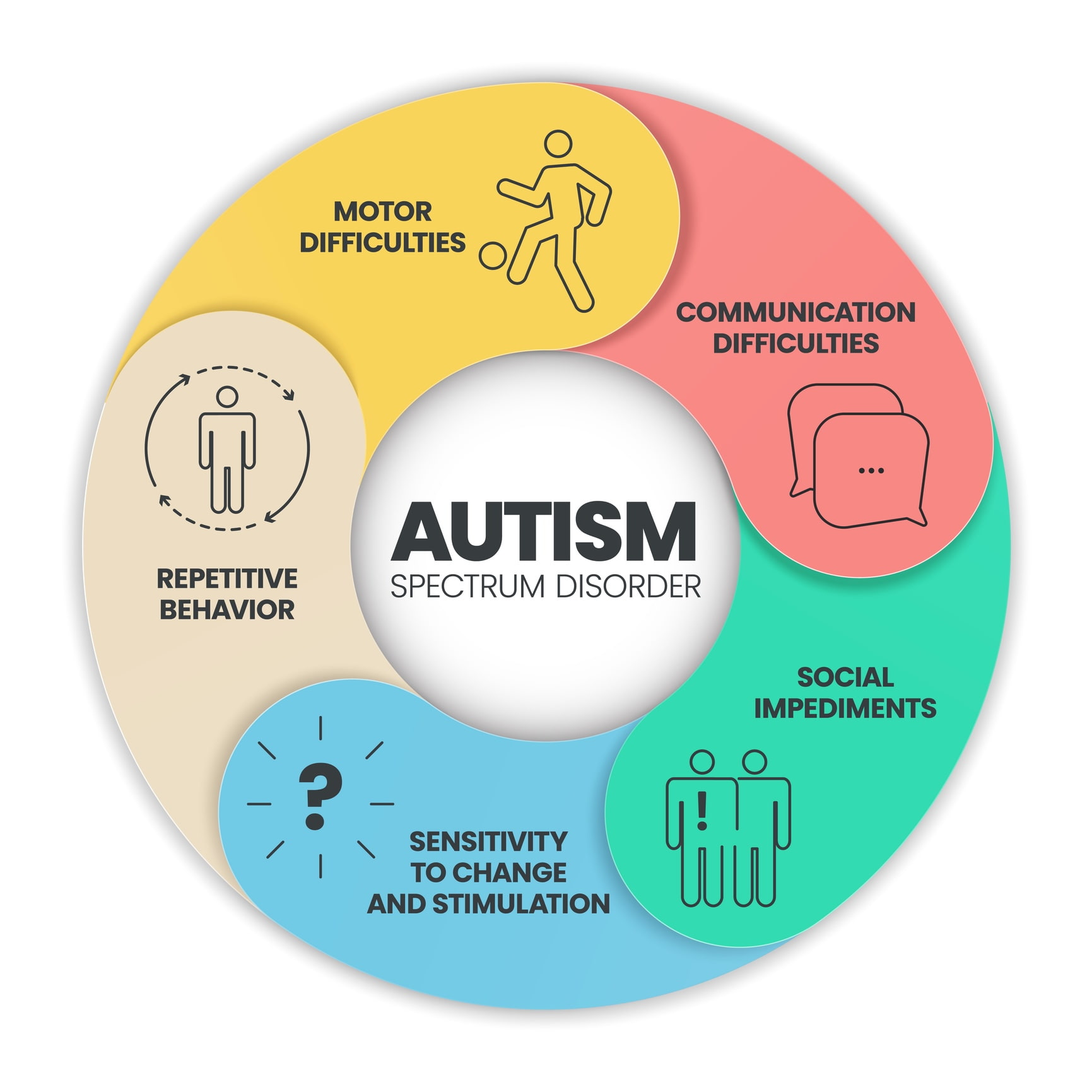
Unlike linear definitions, autism unfurls differently in every individual. Some experience the world with hyper-awareness—sights, sounds, and sensations magnified to orchestral levels—while others may retreat into serene silence, finding solace in patterns, precision, or repetition. What some call rigidity, others might recognize as ritualistic comfort in a chaotic world.
Social conventions, such as eye contact or small talk, may seem intrusive rather than natural. But this divergence is not disconnection; it is simply a different language—a language of logic, detail, and nuance.
Those living with autism might show immense prowess in areas many overlook—mathematics, art, memory, coding, mechanics, or music. Genius, in many cases, coexists quietly with their solitude. Temple Grandin, Satoshi Tajiri, and other pioneers have shown the world that divergent minds do not fall short—they rise differently.
Diagnosing autism involves more than checklists; it demands deep listening. Behavioral signs often appear in early childhood—limited speech, repetitive actions, or difficulty with typical play. Yet diagnosis is not a declaration of limitation. It is a key to unlocking individualized support: therapies tailored to one’s needs, environments crafted with gentleness, and communication tools that honor both voice and silence.
Intervention, when respectful and holistic, can be life-affirming. Techniques such as Applied Behavior Analysis (ABA), sensory integration therapy, or social skills training—when executed ethically—offer tools for navigation, not conversion. The goal is not normalization but liberation—to empower individuals to thrive on their own terms.
Caregivers of autistic individuals walk a tightrope between advocacy and adaptation. It requires patience woven with fierce love, routines sculpted with foresight, and an unyielding belief in potential. For them, every word spoken after silence, every connection made after retreat, is nothing short of a quiet miracle.
But we must also confront societal rigidity. The barriers that autistic people face often stem not from their condition, but from a world unwilling to bend. Classrooms, offices, and social spaces are rarely designed for sensory sensitivity or non-verbal brilliance. Inclusion, then, is not charity—it is justice.
As we evolve, so too must our narratives. Autism is not a flaw in the code—it is a new language of cognition. It calls us to redefine intelligence, broaden compassion, and cherish neurological diversity. It whispers that there is no single “right” way to be human.
To understand autism deeply is to glimpse the profound in the peculiar, the sacred in the silent, and the extraordinary in the everyday. It is to recognize that the world is not only wider than we imagine, but richer—when we choose to see with different eyes.